

The Ivan Rakovec Institute of Palaeontology, in cooperation with the doctoral programme Environmental and Regional Studies (module Paleobiology and Sedimentary Geology), invites you to two public lectures,
on Tuesday, 14 April 2026 at 4:00 PM.
The guest lecturers will be Prof. Attila Demény, PhD from the Institute for Geological and Geochemical Research, HUN-REN Research Centre for Astronomy and Earth Sciences in Budapest, and Assoc. Prof. László Bujtor, PhD from the Institute of Geography and Environmental Sciences, Eszterházy Károly Catholic University in Eger.
The event will be held in English in the Gosposka Hall of ZM GIAM ZRC SAZU, Gosposka ulica 16, Ljubljana.
Prof. Attila Demény, PhD
Institute for Geological and Geochemical Research, HUN-REN Research Centre for Astronomy and Earth Sciences, Budapest, Hungary.
Attila Demény graduated at the Eötvös Loránd University, Budapest, as a geologist in 1986. He is dealing with stable isotope geochemistry since 1988, when he had a scholarship at the University of Utrecht, then he established a stable isotope laboratory in Budapest in 1990. He is dealing mainly with stable isotope analyses of various substances and environments from the Earth’s mantle to paleoclimate archives. He is an author of 170 journal articles and book chapters, and has received 5109 google scholar citations. He is a member of the Hungarian Academy of Sciences, and was a director of the Institute for Geological and Geochemical Research, Budapest, from 2008 to 2026.
Why aptychi and rhyncholites are so good paleoclimate archives: microfabric features and geochemical compositions.
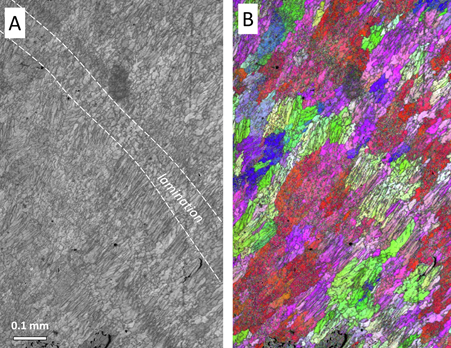
Oxygen isotope analysis of calcitic fossils is one of the most important tools for determining paleotemperatures, for which detection of primary textures and late-stage alterations is essential. I’ll present the results of EBSD measurements of internal structures of aptychi and rhyncholites and their mathematical analyses, as well as stable isotope analyses that demonstrate that well selected aptychi and especially rhyncholites can provide precise paleotemperature data. The studies have been published in International Journal of Earth Sciences (https://doi.org/10.1007/s00531-023-02376-5) and Communications Earth & Environment (https://doi.org/10.1038/s43247-025-02892-z).
Assoc. Prof. László Bujtor, PhD
Institute of Geography and Environmental Sciences, Eszterházy Károly Catholic University, Eger, Hungary
László Bujtor (b. 1965) geologist, graduated in 1989 Eötvös University, Budapest. László earned his PhD at the University of Pécs in 2007 and made habilitation there in 2016. He also gained experiences in the for-profit field working for multinational firms in marketing and sales roles and getting MBA in 2005 at the State University of New York at Buffalo and the Technological University of Budapest.
Research field is palaeontology, including Mesozoic (chiefly Jurassic – Cretaceous) stratigraphy, palaeoecology, palaeobiogeography, and taxonomy of ammonites, brachiopods, crustacean microcoprolites. Main interest is the Mesozoic geology of the Mecsek Mountains (South Hungary) having also experiences from the Transdanubian Range and the Villány Mountains (Hungary), Northern Calcareous Alps (Austria), Cisnadioara (Southern Carpathians, Romania.
László is an associate professor at the Eszterházy Károly Catholic University (Eger, Hungary) from 202 and from 2024 promoted to a Head of Department. Before that he was working fof the University of Pécs (South Hungary) between 2013 and 2022.
László is an author of 177 papers (incl. scientific, popular scientific and fiction books/papers) out of which 50 are in English published in internationally acknowledged papers. Cumulative IF: 40.026, number of independent citation: 484, H-index: 12.
László is a co-curator of Komlóverzum Visitng Centre at Komló (Mecsek Mountains, South Hungary) and the scientific advisor of the institution.
Bouligand structure in Nature – universal application of a simple geometrical phenomenon
French biologist Yves Bouligand recognised a unique, hierarchical helical structure at the external cuticle of decapod crustaceans in 1972. The structure, which is the organisation of organic and non-organic (e.g., calcite) material of living creatures distribute outstanding mechanical properties to the material in which applied.
The structure today called ‘Bouligand structure’ after Yves Bouligand who discovered it. Later research prove the presence in far animal and even plant groups and revelaed its universal presence in Nature. First technological application occurred in 2024 by Rolls-Royce in airplane engine cover plates to strengthen the structure against unprecedented object impacts.
The presentation introduce the maverick science of Bouligad structure, its presence in Nature, possible human applications and the prospects in future material and natural science
Photo: SEM images of a cross-section of Laevaptychus. A – surface image obtained using the EBSD method. B – shows the crystallographic orientation of carbonate crystals. Source: Demény et al., 2025.